




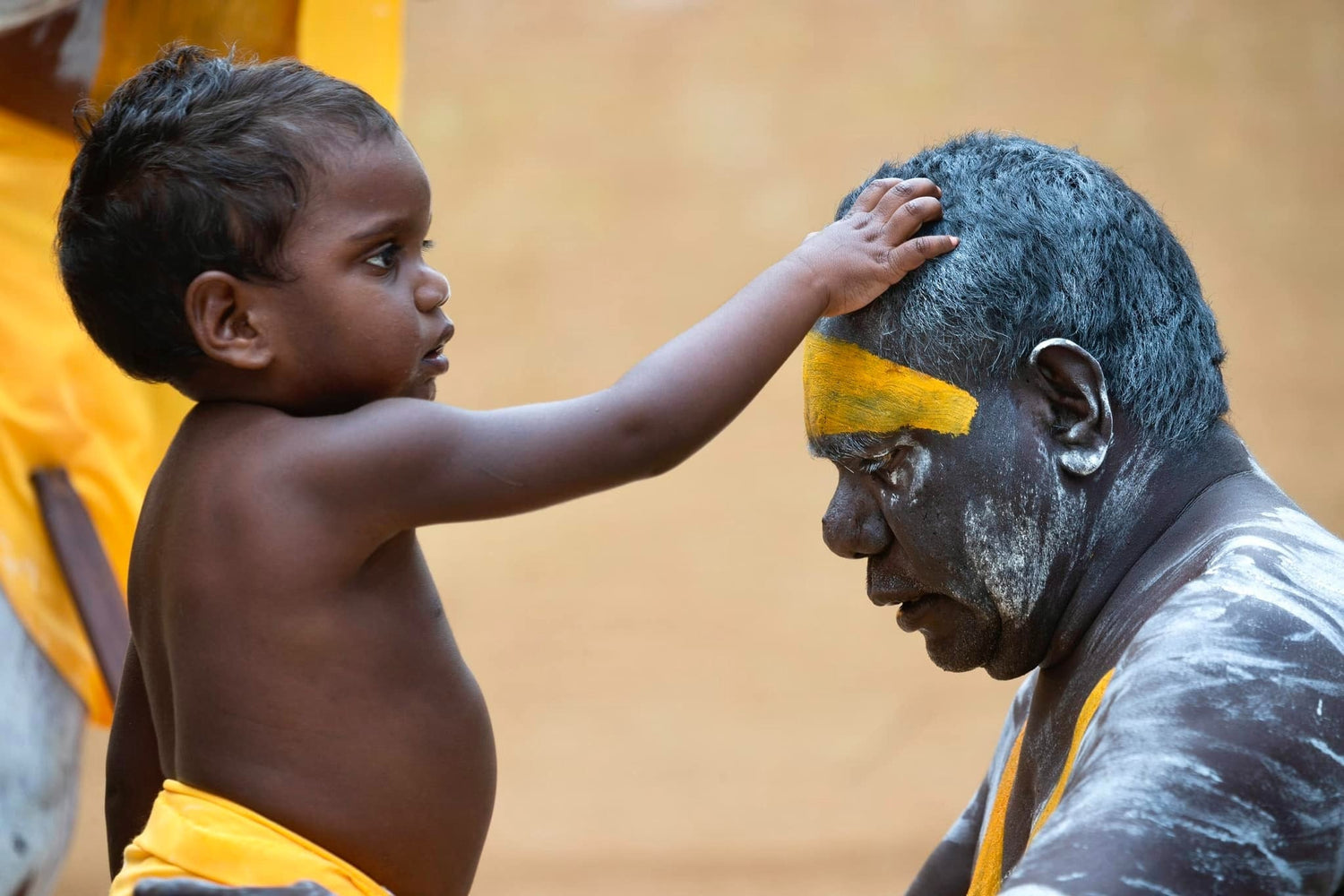
A Sacred Gathering: Culture, Ceremony, Community
Held from August 1–4 at the sacred Gulkula ceremonial ground, Garma Festival remains Australia’s premier Indigenous cultural gathering The Australian+14Garma+14The Grey Nomads+14. The 2025 theme, Rom ga Waŋa Wataŋu—“the law of the land, standing firm”—honours Yolŋu resilience and the enduring fight for land rights.
Over four days, attendees were immersed in traditional miny’tji (art), manikay (song), bunggul (dance), and storytelling—a profound experience of living culture and connectedness.
Key Themes and Cultural Integrity
Garma offers far more than performance—it’s a place where Yolŋu customs come alive. From the daily sweat and spectacle of bunggul at sunset to the open-air Gapan Gallery and cultural workshops, visitors witness and participate in traditions that are as dynamic as they are ancient Nhulunbuy Corporation+8Ausleisure+8Wikipedia+8.
This year’s program booklet also featured a powerful visual tribute: a pictorial collage chronicling native title victories, celestial artwork by the late Gulumbu Yunupiŋu, and cultural symbols by Darryl Yatjany—rooted in landscape, legacy, and the trials of mining.
Politics in Ceremonial Space
Garma also remains a vital policy forum. The Key Forum sessions brought together voices from government, philanthropy, academia, and Indigenous leadership to discuss education, health, land rights, and economic justice.
Prime Minister Albanese’s Announcements
In a major policy moment, Prime Minister Anthony Albanese unveiled a sweeping economic empowerment partnership—co-designed by the Coalition of Peaks and the First Nations Economic Empowerment Alliance. Announced from the heart of Arnhem Land, the package includes:
- $70 million for Indigenous-led clean energy projects
- $31 million for mobile TAFE training in remote communities
- $75 million for native title reform
This marks a shift toward Indigenous-led economic pathways: “Indigenous wealth creation, not welfare” The Australian+5The New Daily+5The Australian+5The Australian.
Calls for Deeper Systemic Change
Yet, the celebrations were tempered by powerful calls for accountability. Denise Bowden, CEO of Yothu Yindi Foundation, delivered a stirring challenge—urging the Prime Minister not to mistake presence for progress. She drew attention to stark realities:
The world’s highest rate of rheumatic heart disease among children in Maningrida
The second-highest Indigenous incarceration rate globally, behind El Salvador
Ongoing misuse of untied GST funding by NT governments
Her appeal was a plea to protect Yolŋu cultural survival—not just preserve ceremony.
Leading voices like Megan Davis and Pat Anderson also decried Garma as being used for political optics, calling out the structural failures behind “Closing the Gap” strategies The Australian+2The Courier-Mail+2The Australian+2.
Corporate and International Exchange
The festival also attracted diverse corporate and global participation—making meaningful connections grounded in reciprocity. Representatives from Pacific Island nations and Indigenous nations of North America (such as Navajo, Lakota, Pueblo) shared their practices, exchanged gifts, and performed in nightly bunggul. Heat of discussion met the warmth of shared culture.
Final Reflections: Generosity, Culture, and Firm Resolve
Garma’s soul lies in its generosity. The Yolŋu people invite the world into their law, their land, and their lifeworld, with grace and solemnity. Despite the splendor of performances, the festival remains a vigilant stand for justice, representation, and self-determination.
Whether through a ceremonial dance or a political speech, Garma holds the line—a place where culture stands firm, truth demands attention, and healing meets action.
Image Credit: https://www.eastarnhemland.com.au/whats-on/events/event/264-garma-festival-2025


Leave a comment
This site is protected by hCaptcha and the hCaptcha Privacy Policy and Terms of Service apply.